Every year, ADS Western holds its AGM, providing an opportunity to take stock of what worked well and identify areas for learning. Key stakeholders are also updated. Here is a snippet from our 2025 Programmes Report.
1. FOOD AND NUTRITION SECURITY
ADS Western achieved transformative gains in food and nutrition security across Western Kenya in 2025. Average farmer household income surged by 204.5% above baseline to reach Ksh 34,931, driven primarily by poultry, egg, milk, and African Leafy Vegetables (ALV) sales. A total of 40,428 kgs of ALVs were produced during the short rains, with 74.3% successfully sold in local and regional markets. Climate-resilient technology adoption remained exceptionally high, with 95% of farmers adopting at least three sustainable technologies and 99% practicing Conservation Agriculture. Post-harvest losses for ALVs were minimized to just 5.1%, while agro-dealers recorded a 10.3% increase in net profits. The RK-FINFA facility unlocked financial access for 7,054 smallholder farmers (64% women, 303 PWDs), supporting bankable business plans worth KES 65.6 million and profiling 501 farmer organizations.
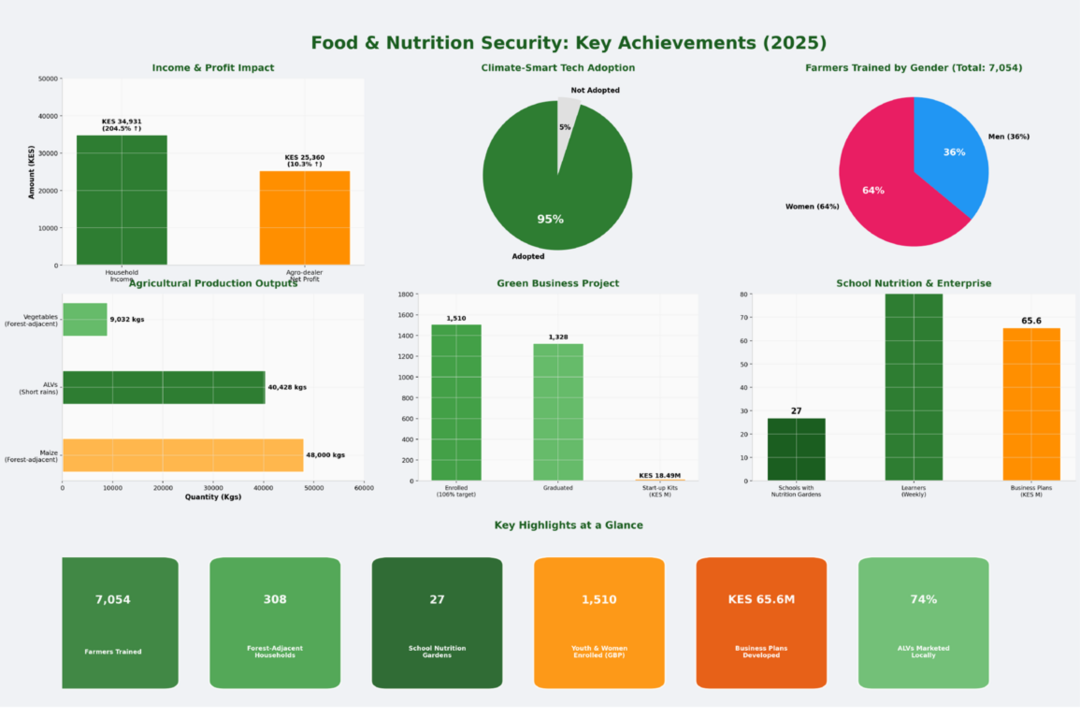
Youth and women-led green entrepreneurship was significantly advanced through the Green Business Project, which enrolled 1,510 youth and graduated 1,328 (88% completion rate, 52.56% female), distributing 740 startup kits valued at KES 18.49 million. School nutrition gardens supported 4,520 learners, while 5,008 farmers received nutrition training through 190 community-based trainers. Food security outcomes showed moderate improvement, with 33.9% of households achieving acceptable Food Consumption Scores. These interventions collectively strengthened resilient food systems, diversified local supply chains, and enhanced household dietary stability across Kakamega, Bungoma, Vihiga, Busia, and Kisii counties.
2. Climate Change & Natural Resource Management
Climate resilience and ecosystem restoration were advanced through the PASFM and SCARLP projects. Under PASFM, 45,000 indigenous tree seedlings were propagated, with 3,000 planted in Kakamega Forest, 1,000 at Mukulusu Primary School, and 2,000 distributed to community groups and households. Five acres of degraded forest land were rehabilitated, improving canopy regeneration, watershed protection, and biodiversity recovery. Renewable energy adoption reached 47.2% among target households through energy-efficient cookstoves, biogas, and solar cooking technologies, significantly reducing fuelwood pressure on Kakamega Forest and lowering indoor air pollution.
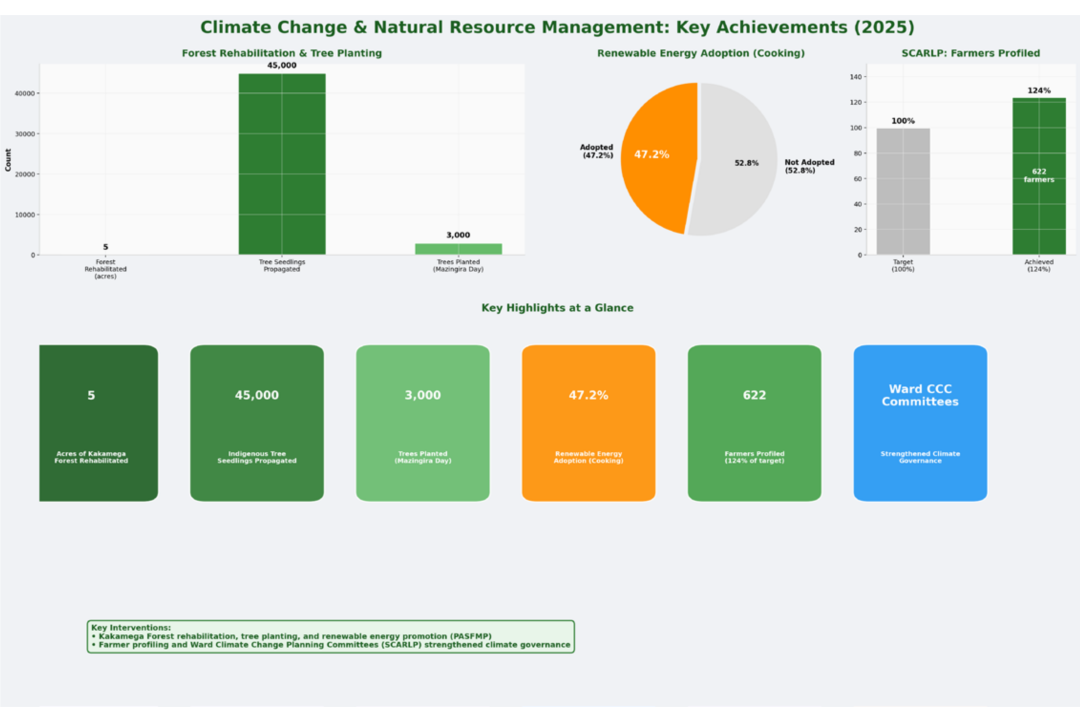

Institutional climate governance was strengthened through SCARLP, which profiled 622 producer groups (124% of target) and empowered Ward Climate Change Planning Committees (WCCPCs) with Climate Information Services training. County climate outlook forums translated seasonal forecasts into actionable advisory information for farmers. Agroecological production yielded 9,032 kgs of vegetables while reducing forest dependency. The project also significantly enhanced the participation of women and youth in climate decision-making platforms, reinforcing equitable and sustainable climate adaptation processes across Bungoma and Kakamega counties.
3. Integrated Health & Social Protection
ADS Western strengthened household resilience through the Moments That Matter (MTM) Program and the SMILES Project. MTM reached 1,170 households and conducted 9,053 structured home visits, supporting 1,867 children under three years with positive parenting coaching, nutrition counseling, and hygiene education. Village Savings and Loan Associations mobilized KES 2.38 million in household savings, enabling caregivers-particularly mothers-to smooth consumption, invest in small enterprises, and access emergency health funds. Additionally, 186 households were enrolled in the Social Health Insurance Fund (SHIF), reducing catastrophic health expenditure risks.
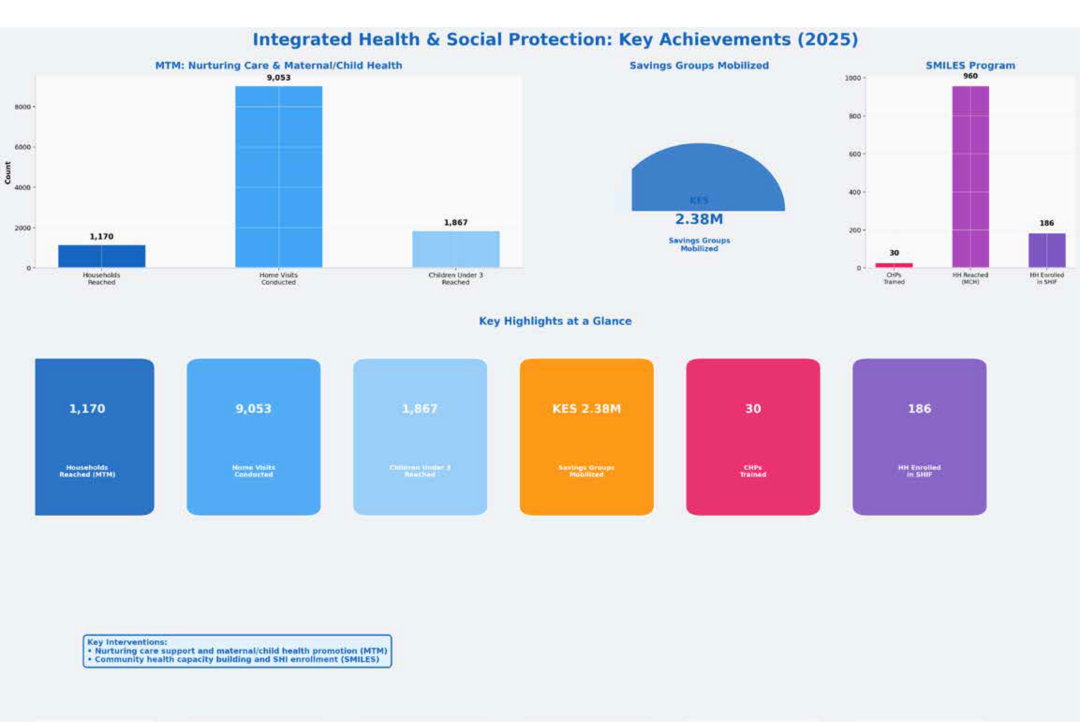

Maternal and child health outcomes were improved through the SMILES Project, which trained 30 healthcare workers in basic emergency medical and obstetric care across Khwisero and Mumias East sub-counties, and strengthened two health facilities through needs assessments and health plan development. Thirty Community Health Promoters were trained in preventive healthcare and disease surveillance, while Community Health Committees were reinforced for better local health governance. A total of 657 women received targeted maternal and preventive health education, and 960 households were profiled for maternal and child health interventions. Twelve community dialogues engaged 457 men and boys on reducing teenage pregnancies and supporting maternal health access.
4. Human Rights, Governance & Peacebuilding
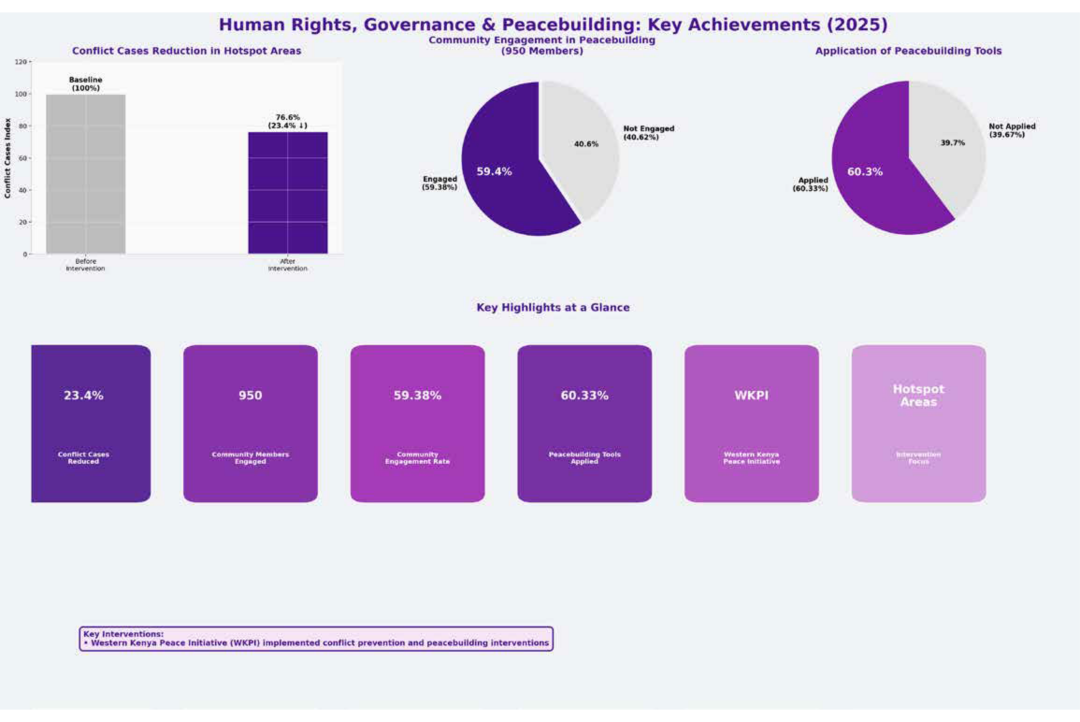
The Western Kenya Peace Initiative (WKPI) delivered measurable reductions in localized conflict, achieving a 23.4% decrease in reported community disputes and an 11.63% reduction in inter-group tensions across targeted wards in Mt. Elgon. These gains reflected strengthened early warning systems, mediation capacity, and community dialogue platforms. A total of 950 community members—including youth leaders, women representatives, faith-based actors, and local administrators—engaged in structured peace forums. Peace actor competency rose above 60%, with 695 conflict-affected individuals reporting recovery. Interventions prioritized participatory dialogue, interfaith engagement, and non-violent youth civic participation.

The Gender Justice Project was launched in Mt. Elgon during November–December 2025, emphasizing community mobilization and gender-based violence (GBV) awareness. Activities included stakeholder mapping, dialogues with local leadership, women and youth forums, and sensitization on rights and GBV reporting pathways. ADS Western actively participated in the global 16 Days of Activism Against Gender-Based Violence, facilitating public awareness forums, school-based sensitization sessions, community dialogues on harmful norms, and engagement with faith leaders on gender equity. These interventions collectively advanced rights-based development, democratic governance, and social cohesion within fragile and politically sensitive contexts.
As we look ahead, ADS Western remains committed to deepening impact, strengthening sustainability, and pursuing innovative solutions that address the evolving needs of the communities we serve.


